

The Long Grief
On trauma and grief, mostly

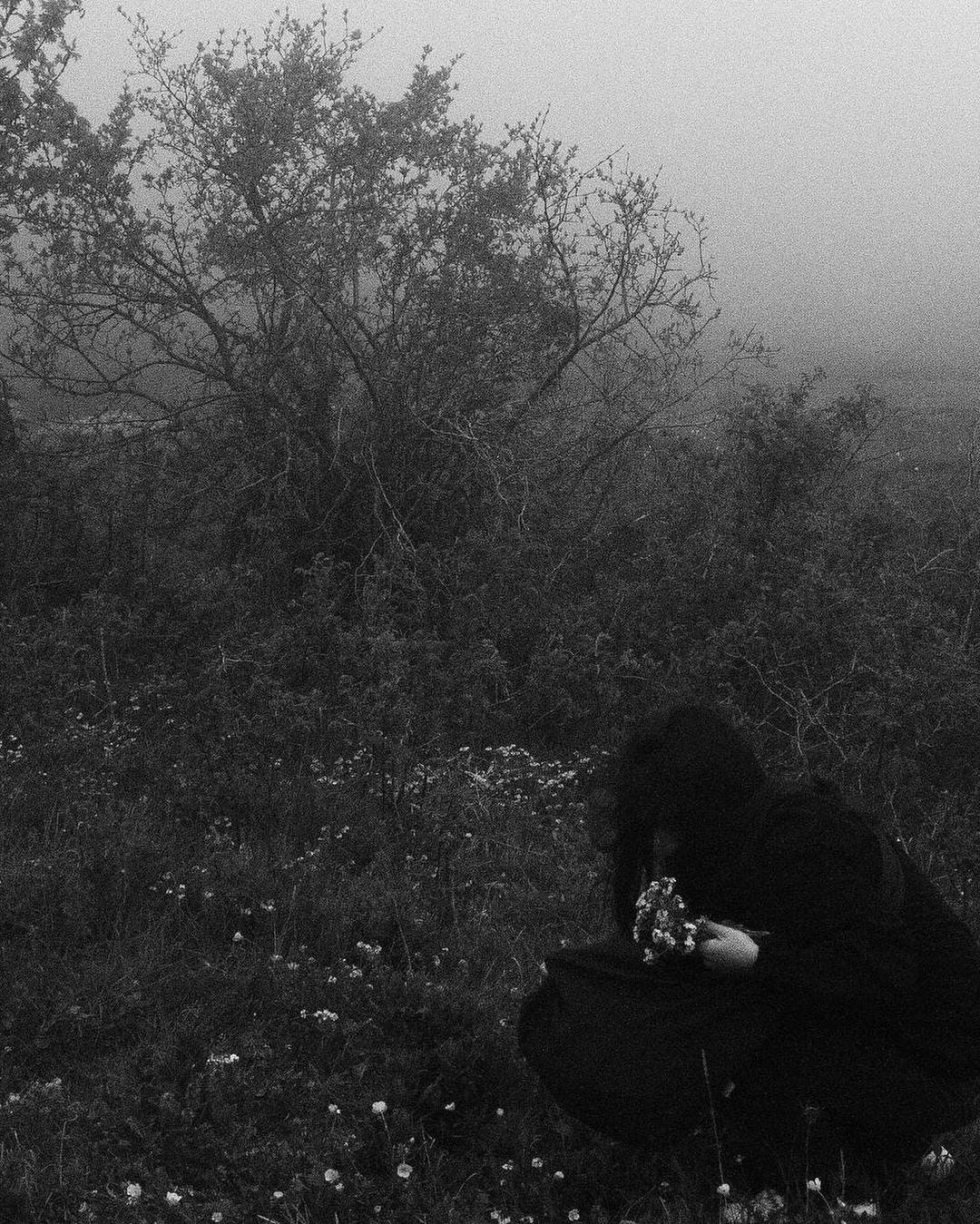
I have been thinking about grief these past few weeks. Given my intimate knowledge of trauma, one might think that I have a handle on grief as well; where there is trauma there is usually grief and, especially in the case of complex trauma, it is not merely coinciding but core to the experience. In psychological terms, when grief and trauma become entangled the result may be what is termed “complicated grief”, or, if you prefer the language of the DSM, Prolonged Grief Disorder. This is the grief I know, the problematic type. But the grief I have been thinking about, of which I have relatively little personal experience, is normal, healthy grief, the kind that is endemic to the human condition. Grief is defined as anguish, sorrow, or distress experienced as the result of a loss, due to or as if by bereavement. Death, divorce, loss of home are all common sources of grief, though regret for something lost, remorse for something done, or sorrow for a mishap to the self may also cause grief. While individual manifestations and ways of processing grief vary, its experience is universal. There is a lot of it in the world right now.
Here is what happened: in the course of a week, one old family friend passed away unexpectedly and another, stricken by what is often called “turbo-cancer” and having exhausted all treatment avenues, notified my parents of his imminent departure from this earthly plane. Though it has been decades since I saw or spoke to this person, I was charged with procuring the flowers and writing the note, to be signed in my parents’ names. I looked for a bit of writing or poetry suitable for a final farewell but could not find anything I liked, so I ended up composing a short letter expressing sentiments my mother later agreed to be an accurate representation of her thoughts and feelings, if she were able to access and articulate them on her own. And thus, a number of things occurred to me. One, it seems to be unusually common, given the amount of deaths during and subsequent to the pandemic, to be in a situation where the passing of someone who is not close enough to elicit personal grief, to whose funeral attendance might be more awkward than respectful, nevertheless presents a confrontation with loss and death and grief that ought to be faced, embraced with eyes and heart open. There is so much change, upheaval everywhere that grief for the sunsetting world and its casualties is inevitable but often ignored, invalidated, even shunned, lost in eagerness to usher in the new or at least to survive it. To acknowledge and feel the losses inherent in this time of transition is to stay present with the current of life, for grief that is inhibited does not run its natural course and might get jammed at one of its transient states - anger, denial, apathy, despair - or ossify entirely, a weight carried, slow and burdensome and refusing. If we are to make meaning of our collective condition, to integrate the changes and to move forward bright-eyed and clear, it will be necessary to do some grieving. Two, it is also common, for a variety of reasons, to remain untouched by grief in any way but intellectual, much less to know what to say or do when it presents itself. My parents, both, have experienced a great deal of loss. My father lost his parents within six months of each other when he was only nineteen years old, my maternal grandfather arranged his own exit from this world. Though he was relatively young, there was pain and only the prospect of more pain, his reasons were arguably justifiable, but, unlike the family friend to whom I composed a good-bye letter, his course of action was neither state-sanctioned nor supported in means and counselling resources, and so he consulted with no one, left his family entirely unprepared. And my parents faced other losses and types of losses, nearly none of them properly processed, and so on, and so forth, until compounded grief, an invisible yet dense energy, became a constant presence, stifling integration of any additional sorrow as well as the full expression of joy. I think the reason that I’m writing this, even though it is spring and there are so many beautiful things and I’d rather be romping about a meadow, is that I will be faced with the loss of my own father, in all likelihood months not years soon, and I very much want to engage the grieving and mourning and farewell process in a way that is healthy and conscious and complete.
But thus far I really only know grief and trauma, so today I will tell you about that. Some losses, like the kinds experienced by my parents, are so sudden, violent, or disorienting that they trigger trauma responses and result in symptoms similar to PTSD, such as intrusive memories, flashbacks, hypervigilance, avoidance, emotional numbing, negative mood. This is called traumatic grief, and though it is a more difficult grief to process than the normal kind, it does not always result in PTSD. When it does, or if PTSD is pre-existing, the natural grieving process is disrupted or inhibited. It might also result in Prolonged Grief Disorder, which is similar to PTSD in its pervasiveness and emotional and somatic dysregulation, but distinct in its symptoms, such as intense yearning, preoccupation with the deceased, emotional pain, difficulty accepting death, emptiness, loneliness. Even when there is no death involved, trauma often includes grief, as in the loss of a home in a fire, or, in complex trauma, as in the loss of a childhood, the loss of a culture and way of relating, the loss of sense of self, the loss of potential, just to name some.
Grief and trauma share physiological and emotional pathways. Both activate the limbic system and the stress response, both involve processes of integration and meaning-making. When trauma is unprocessed, the nervous system stays in a state of hyperarousal or shutdown. This dysregulation can prevent someone from being able to engage with the natural process of mourning. Conversely, unresolved grief, when the pain of loss is suppressed, invalidated, or unintegrated, can exacerbate trauma symptoms by disrupting the emotional and physiological processes needed to mourn. In short, trauma blocks grief and grief feeds trauma.
The way grief operates in classic versus complex PTSD is analogous to the way trauma operates. As trauma in classic PTSD is event-bound and singular so too is the grief that coincides or follows, as in experiencing or witnessing an accident that leads to a death, and the subsequent mourning of that death. The trauma and grief processes are separate but may co-occur. Their causes are identifiable and nameable. Trauma in CPTSD, on the other hand, is chronic, repeated, has a relational element, and is sometimes nebulous in that its causes may be subtle or even covert, difficult to identify and to articulate. Grief in this case may be part of the trauma, rather than a separate but coinciding phenomenon, chronic and more abstract in nature. It can manifest as sorrow for a lost sense of innocence, mourning a self that was never allowed to flourish, or grief for a shattered sense of self and worldview, sounding like: "I am broken, I will never be okay, the world cannot be trusted.” The trauma in CPTSD is complex, and its accompanying grief is ongoing, cumulative, and frequently frozen, looping, or delayed. Unlike typical grief that follows a natural arc of adaptation, this prolonged grief becomes chronic, stuck, and functionally impairing.
Here is something that is true of both trauma and grief: processing each of them entails a release, and you cannot contain and release at the same time. A traumatized state is a state of survival, and though the mechanisms employed by the psyche to that end may vary in type and effectiveness, there is generally a lot of containing happening, of holding on and holding it together and holding it at bay enough to maintain some semblance of functioning. If there is not enough safety, circumstantial, physiological, a release might overwhelm an already overloaded system and cause collapse. Somatic therapies help to stabilize the nervous system’s trauma responses, to expand its window of tolerance to stressors and triggers, and also to teach the individual how to release tension in small amounts that do not throw the system into collapse, like deflating a balloon bit by bit rather than popping it. Grief is not released this way. Trauma responses impede the mourning process, therefore in cases where trauma and grief are entangled, trauma resolution precedes it.
If trauma is like an injury that will not heal, then unprocessed grief, even the normal kind, is like carrying something around, something frozen or fossilized. If there is too much containing to do in the aftermath of a loss - others to care for, life details to handle, career objectives to prioritize, feelings too mixed and complicated to face - even normal grief may be delayed. This is not prolonged grief, but unresolved grief, and it may surface to be released many years after its cause. The fact of delayed grieving often having a cathartic quality suggests its presence in the system, however subtle, the whole time prior. I do not know what can “speed grief up,” or if that is a desirable thing to do, but it seems that tending to it, even in a small way, even just writing on a piece of paper “I think I might be sad, I do not know if or when I will feel it,” and giving the paper to a stream to carry for the time being, might keep the grief from solidifying and make it easier to move when its time for release comes.
For many years I held a feeling of mourning, of grief that would not resolve. I felt like I was mourning myself, a lost sense of wholeness and empowerment, as well as the loss of its potential. At the same time, I felt that this grief, certainly its quality and intensity, was unwarranted. Yes, I was traumatized, and yes, that entailed the more abstract sort of losses, but I was young enough and capable enough that the level of despair, as though I were not merely facing challenges but dead, was disproportionate to my situation and at odds with my overall mindset. Still, sometimes I could not contain it and it burst out in the form of crying jags that offered no relief. “Recycling grief,” one of my therapists termed it. I was often confused by it, felt like I was watching a slow motion car crash that I could not stop, and nothing I did, no therapy or practice made it resolve. Which brings me to another kind of grief: generational. When there are strong negative feelings that seem to have no cause and do not resolve, it is sometimes a manifestation of an enmeshed, trauma-bonded family system and the feelings actually belong to someone other than the person feeling them. But sometimes, losses experienced by prior generations that were not fully processed, integrated, or mourned are inherited psychologically, relationally, or biologically by descendants. The grief is often unspoken, implicit, and diffuse, like the spectre of grief in my own family, and affects later generations. When I understood that much, most of the grief I was holding was not mine to carry, and I felt it coming on, I would sometimes say the phrase “Life is now” to anchor in the present, to assert agency over the experience. With the generational grief untangled, I tended to my trauma, and was eventually able to move my own grief, with tears that did bring relief.
Though I have not exhausted the topic of grief and will return to it in upcoming posts, with all this heavy and reluctant talk of it on a sunny day, this strikes me as a good way to leave off for today:
Life is now.

There is indeed so much grief in the world right now... thank you for articulating so perfectly, in doing so you are holding the space for those of us who holding the space for others, and I am grateful.
That was beautiful writing, lucid, raw, and deeply human.
Your reflection captures something many avoid putting words to: that grief isn’t an isolated emotion, but a system event, it moves through generations, physiology, language, even silence. You describe that entanglement with rare clarity.
What struck me most is the idea that “you cannot contain and release at the same time.” That’s truth. Grief requires safety, not the absence of pain, but the permission to feel it without fracturing.
And when you said “Life is now,” it felt like a benediction. After all the layers, inherited, delayed, recycled, it lands as the simplest and hardest practice of all: to stay present enough to let life move through you again.
Atmanjeet, when you imagine “grieving well” for your father, what does that look like to you in real, lived terms?